

The air is still. The sun is bearing down heavily and the heat is relentless. It is like someone’s pulled a bag over your head—it is stifling hot. I recognise the humidity. It reminds me of the tropical temperatures of Malaysia.
Naturally my mind turns to food. Rather unnaturally it is not ice cream that I desire today. I am thinking of ice-cold cendol.
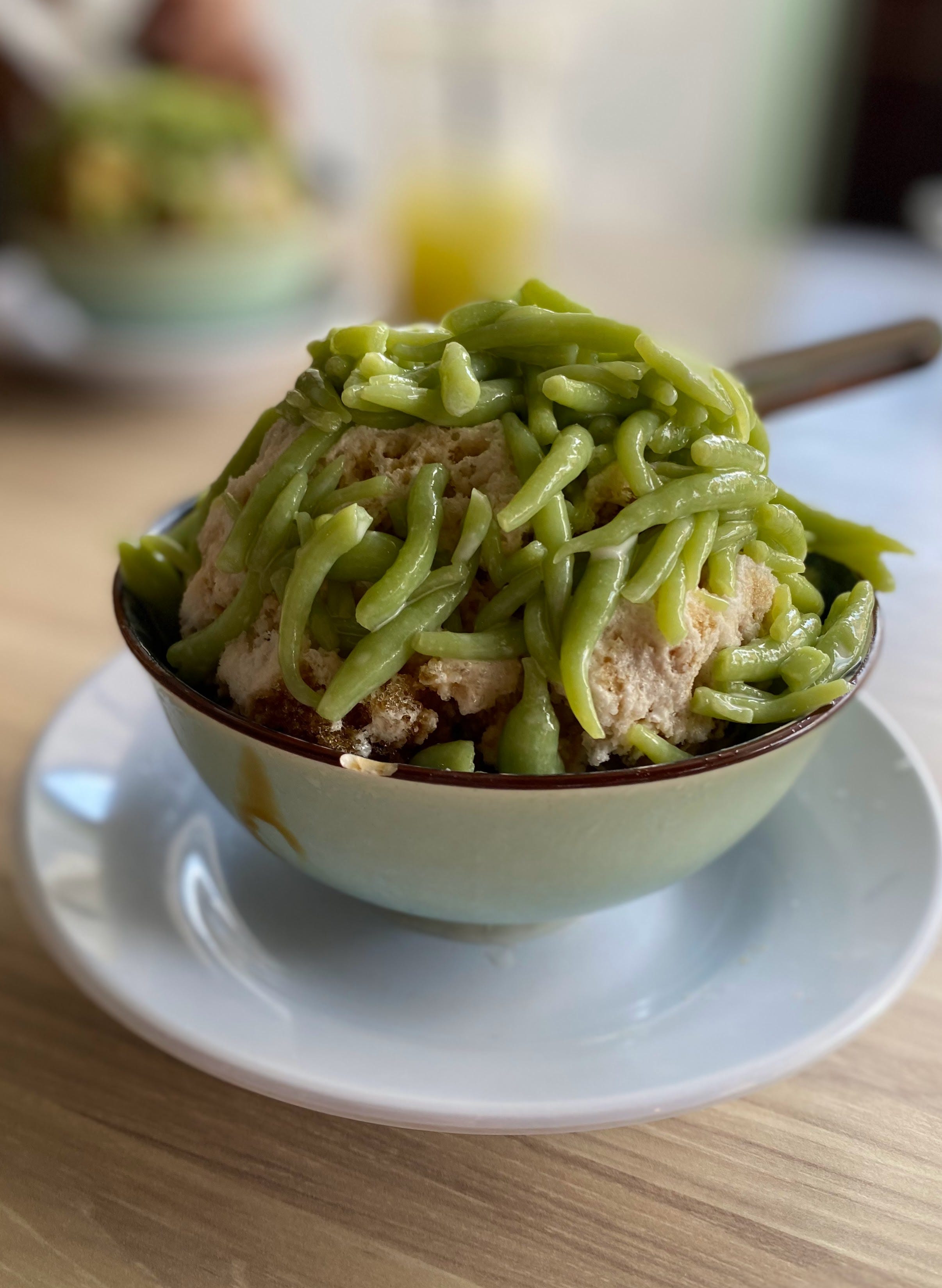
A mountain of finely shaved ice, soft like snow, it is piled precariously high in melamine bowls. On its own, it looks like Mount Fuji. Ladles of sticky, gula melaka syrup is spooned over the ice—soaking it and turning the white mounds to the colour of burnt toffee. The deep flavour of the palm sugar syrup tastes like smoky caramel. The syrup is like tar and it infuses the ice.
Next, coconut milk or santan is spooned generously over the ice. It changes the colour of the ice. It becomes lighter like the colour of buttercream. And the sweetness of the gula melaka syrup is also lifted, now balanced by the salty, creamy, nuttiness of the santan.
“Cendol” refers to the noodles made from mung bean starch or rice flour and shaped like green worms. Their colour comes from pandan, a screwpine leaf, commonly used in Southeast Asian cooking and desserts. The aroma of pandan imparts a subtle touch of grassiness to the noodles.
Combined, the coconut, gula melaka and pandan make up the holy trinity of Malaysian and Singaporean flavours.
I like my cendol just like that, but some have it with adzuki beans and sweet corn too.


Cendol is cold. It is sweet, and it is creamy. When you’ve been sat under the whirring fans and the sweat licks your skin, having this icy dessert brings sweet relief to the oppressing heat.
Gingerly break the snowy dome, taking care not to drop any of the noodles on the table and mix it all up.
You will most likely have to race to finish it. Spoon it quickly before the ice melts. But let me warn you, it will be futile: the heat always wins. The mixture will pool at the bottom of the bowl, so raise the bowl to your mouth and drink it all up.
It is heavenly.
So, Where Are You From?
The first mention of a sweet drink that is similar to cendol is found in Kakawin Kresnayana, an old Javanese poem by royal scribe, Mpu Triguna in the 12th century. The drink, dawet was made with coconut milk, palm sugar and green droplets made of rice flour.
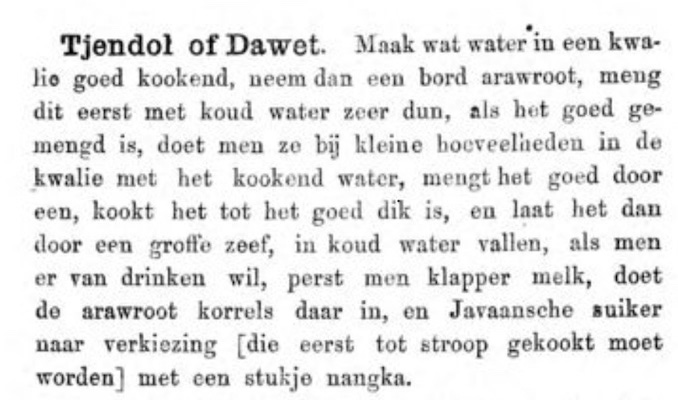
Another version was printed in the colonial culinary literature Oost-Indisch Kookboek in 1866 as a dish called Tjendol of Dawet. The Javanese and Sundanese word, jendol meaning “bump”, “bulge” or “swollen” describes the appearance of the worm-like green strands after they are pressed through a perforated sieve. The recipe in the Oost-Indisch Kookboek was made with arrowroot.
Massive blocks of commercial ice was imported to the ports of Penang, Malacca, Singapore and Jakarta in the 1850s. By the 1890s, ice was considered a necessity. As ice became more readily available, cendol became closer to the version that is eaten today.
But Where Are You Really From?
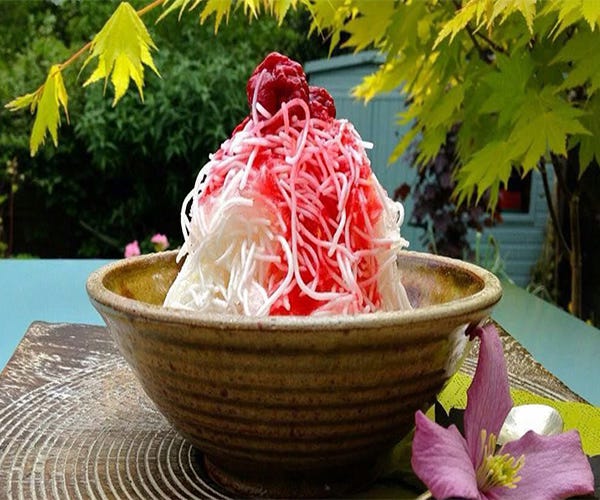
There are many theories suggesting that cendol is derivative of an ancient Persian dessert called faloodeh brought to the Malay Archipelago by Middle East traders. At its simplest form, it is vermicelli served with rose water, sugar syrup and ice.
A subterranean chamber insulated by massive mud-brick walls up to six feet thick were built to store the ice that was brought down from mountains during winter. These ice storage houses known as yakhchal allowed ice to be kept all year round in the desert.
The common denominator between chendol and faloodeh is that they both contain jelly-like noodles that are made by pressing a hot starch batter through a sieve into ice water. The noodles in chendol have a more teardrop-like appearance while those in faloodeh, being pressed through a finer meshed sieve, resemble vermicelli.
Pamelia Chia on Chendol.
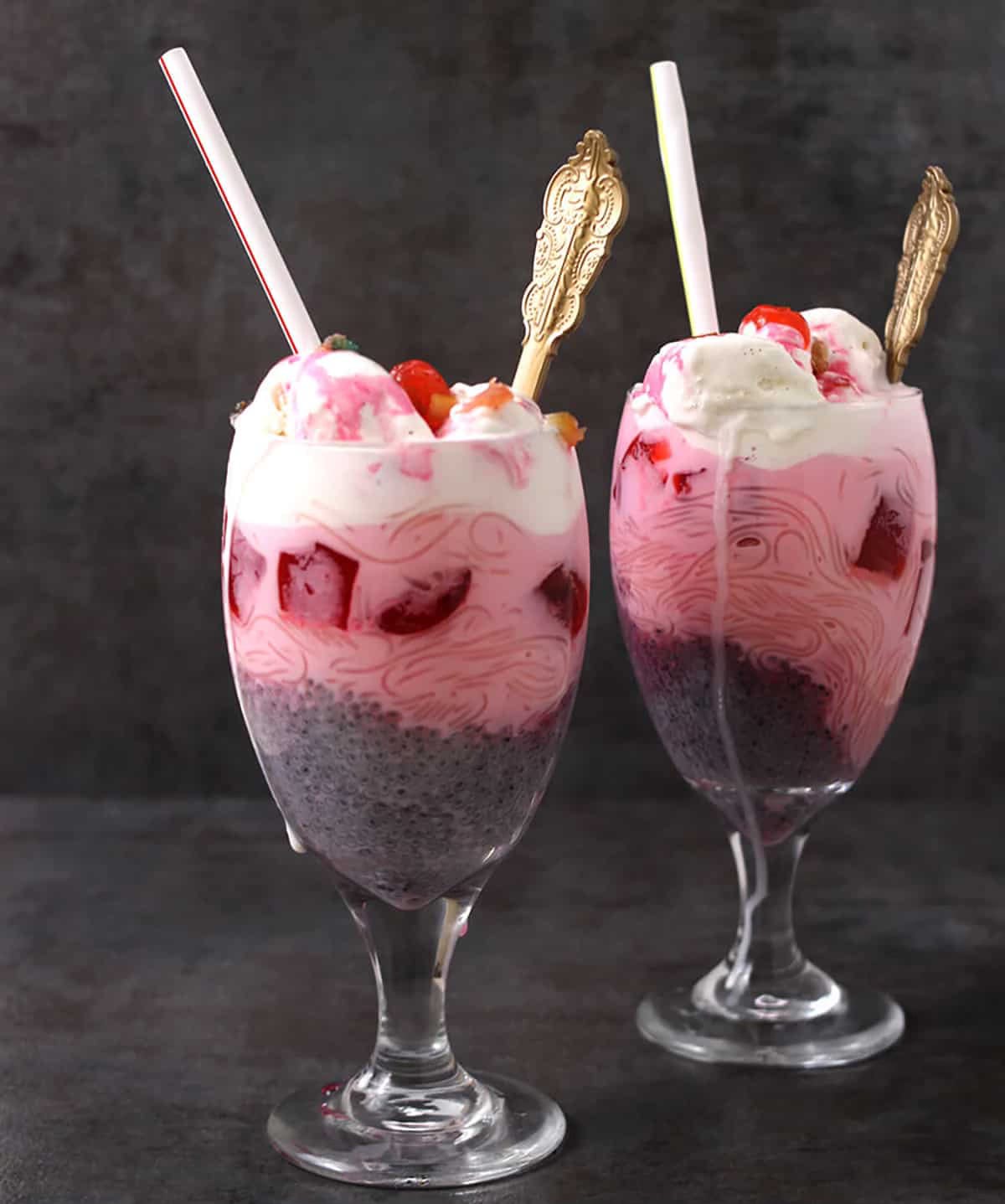
The theory is plausible. Trade expanded and when the Mughal Empire established itself in India, faloodeh became falooda. The Indian adaptation used milk, sweet basil seeds and noodles made from corn starch. As more Arab and Indian Muslim traders journeyed the maritime Silk Road to Southeast Asia, many ended up settling in the archipelago and adapted falooda using local ingredients.
If there is a strand of truth here, then cendol can trace its culinary lineage to faloodeh.
We All Eat The Same
Variations of cendol exists across Southeast Asia. In Vietnam, it is known as Chè Bánh Lọt and is served layered as a drink with lots of textures. The Thai name, Lot Chong translates to “gone through a hole”, describing the process of making the starch worms/noodles. The Burmese version is called Mont Let Saung or Shwe Yin Aye and is usually served with sticky rice and sago. Sometimes it is even served with bread! In Malaysia and Singapore, red beans or adzuki beans are typically added, the influence of the Chinese communities in these countries.


It’s a testament that this is a stellar combination that is much loved across the region. When something tastes as good as cendol, it’s no surprise that each country makes its own version.
The current heatwave has me craving this. If I were in Kuala Lumpur right now, I would head over to Sistars Kitchen in Happy Mansion where the best cendol can be found. And trust me, I’ve tried plenty. In fact, a few years ago I tasked myself with the job of hunting down the best cendol, making tasting notes as I went along. I was hoping to write the Cendol Chronicles as I coined it. So here I am, in the middle of this heatwave missing home and craving for a cendol: the only thing that’ll get me through this heat.
What a wonderful read! 10/10 from me, keep shining
That sounds so good! I would happily any any/all of those dessert variations right now. But in current desperate, sweaty circumstances may have to settle for a Twister lolly.